
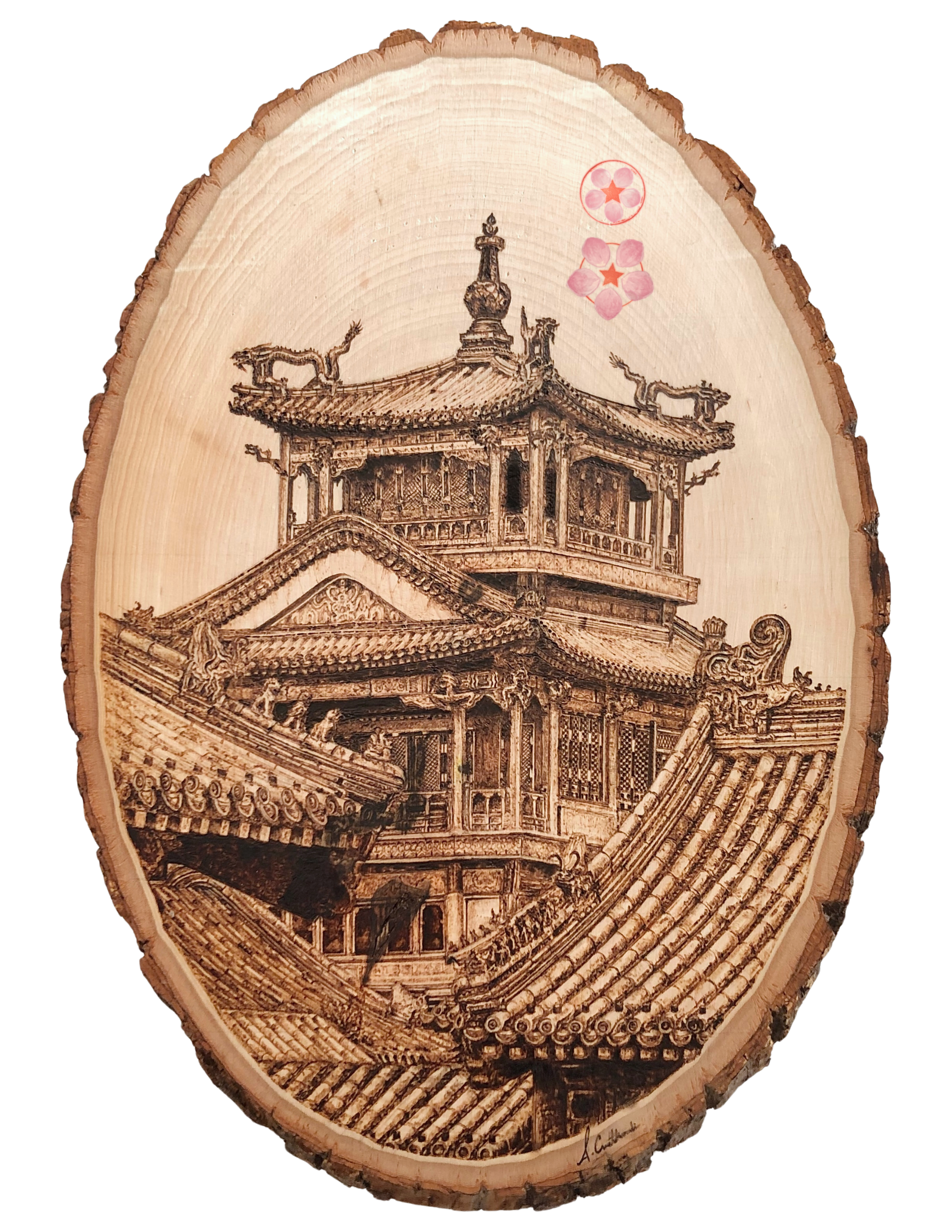
Reigning Flowers
2022. Pyrography and acrylic on wood panel, 16 × 9 ½ in.
The Pavilion of Raining Flowers in the Forbidden City takes its name from a Buddhist story in which flowers fall from the sky to signal that true doctrine is being taught. During the Qing dynasty, this miracle motif was incorporated into art and architecture to frame imperial rule as cosmically sanctioned.
In this piece, the “raining flowers” above the pavilion are intertwined with gōngzhāng: CCP stamp seals bearing the five-pointed star. An ancient sign of divine approval becomes a modern symbol of institutional authorization. The language shifts, but the claim to legitimacy endures.
The continued use of moral symbolism can make authority feel natural and unquestionable. This work asks whether modern governments have abandoned the idea of sacred power, or simply translated it into secular form.
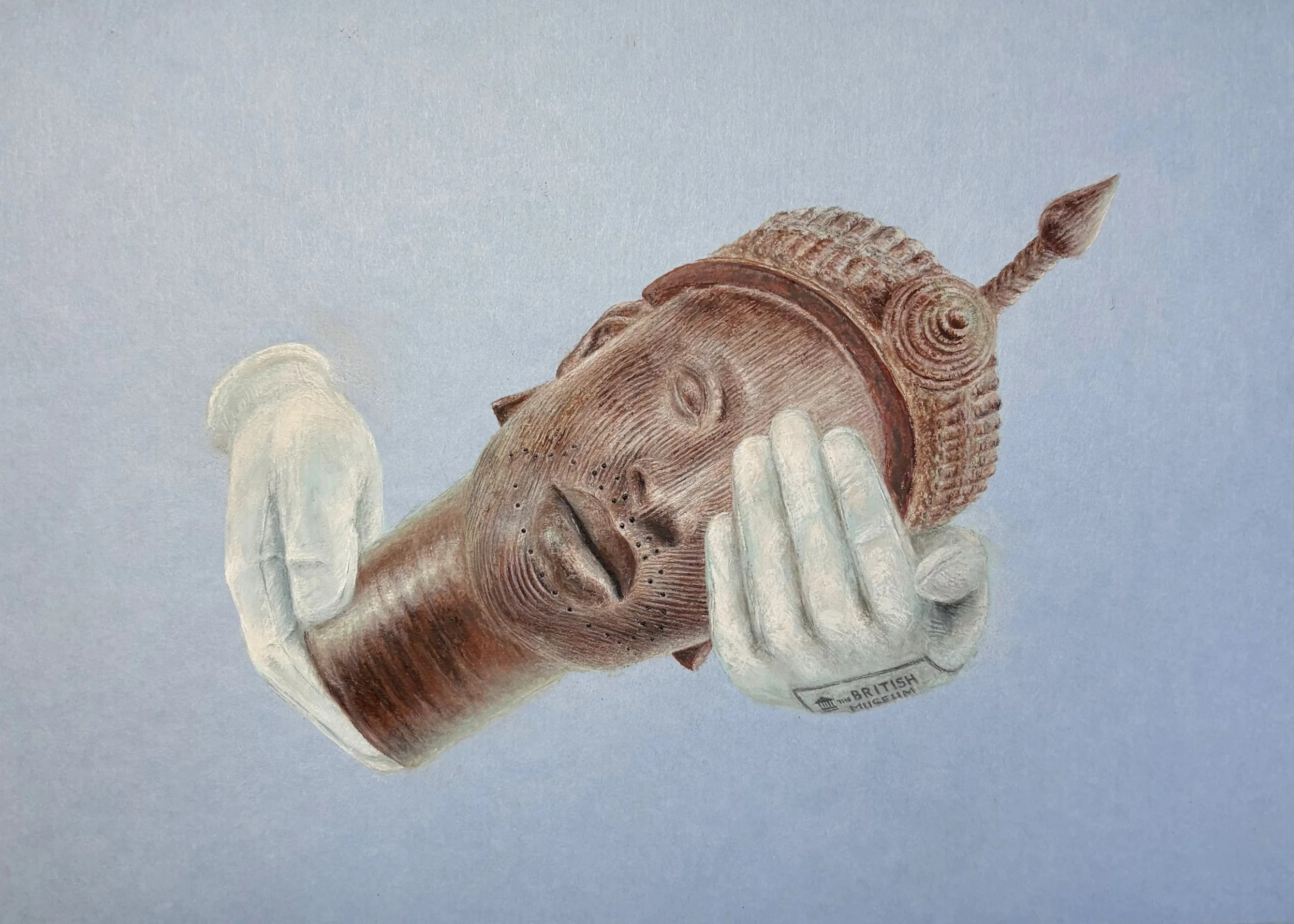
Error 401
2025. Gouache on paper, 5 × 7 in.
The iconic Ife Head depicted in this piece is one of several fourteenth- and fifteenth-century copper-alloy sculptures that were removed by colonial authorities from the Yoruba city of Ife in present-day Nigeria. Today, separated from its original sacred context, the Ife Head resides in the British Museum. While museums often position themselves as neutral stewards of global heritage, the violent origins of many collections remain inseparable from their histories.
The title, Error 401, merges two meanings. In Yoruba cosmology, 401 is a sacred number. Ife is known as “the city of 401 deities.” In digital terminology, a 401 status code error signals restricted access. Together, these references point to a painful irony: Africans must encounter the masterpieces of their own cultural heritage within Western institutions, mediated through Western portrayals and presentations.
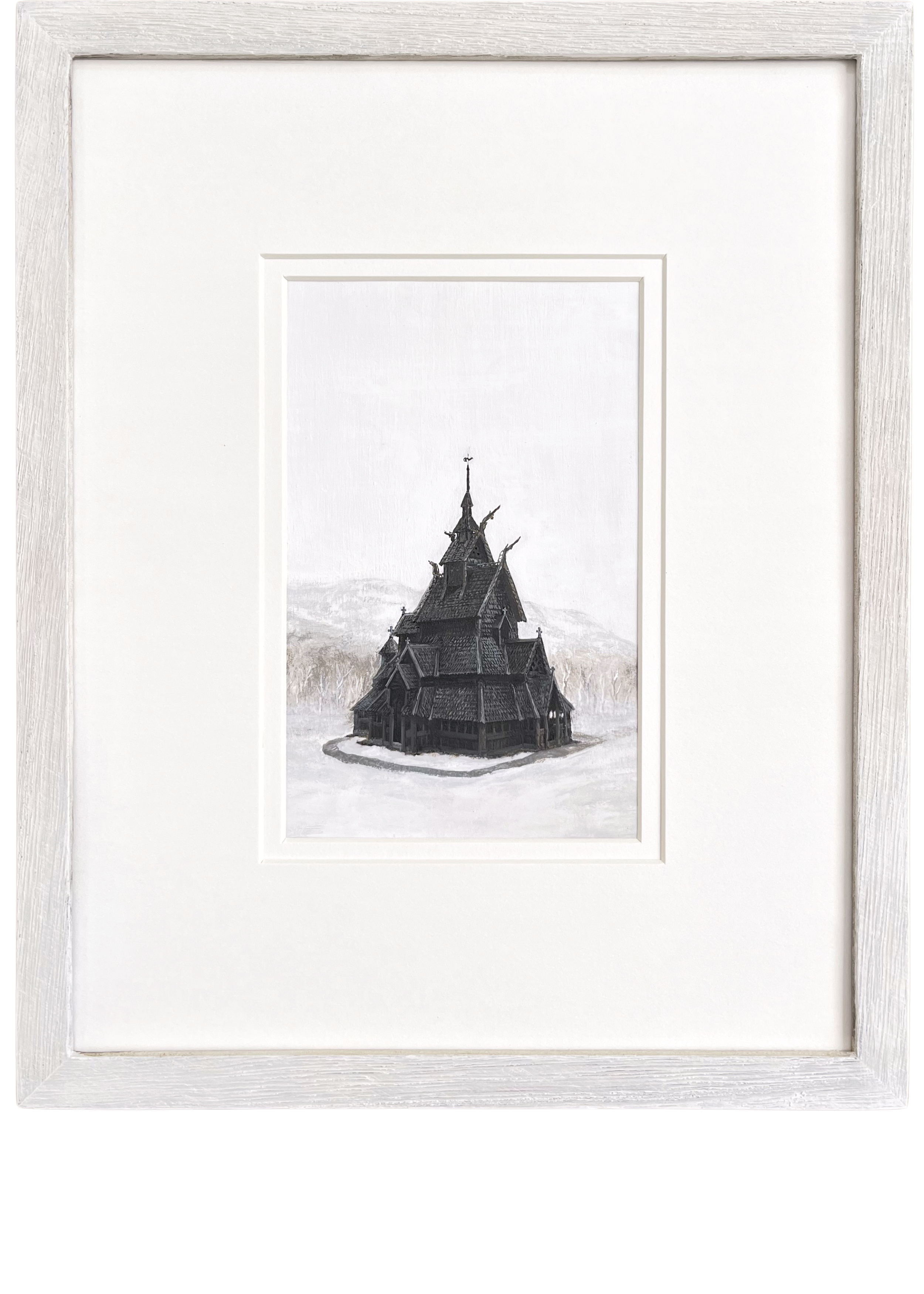
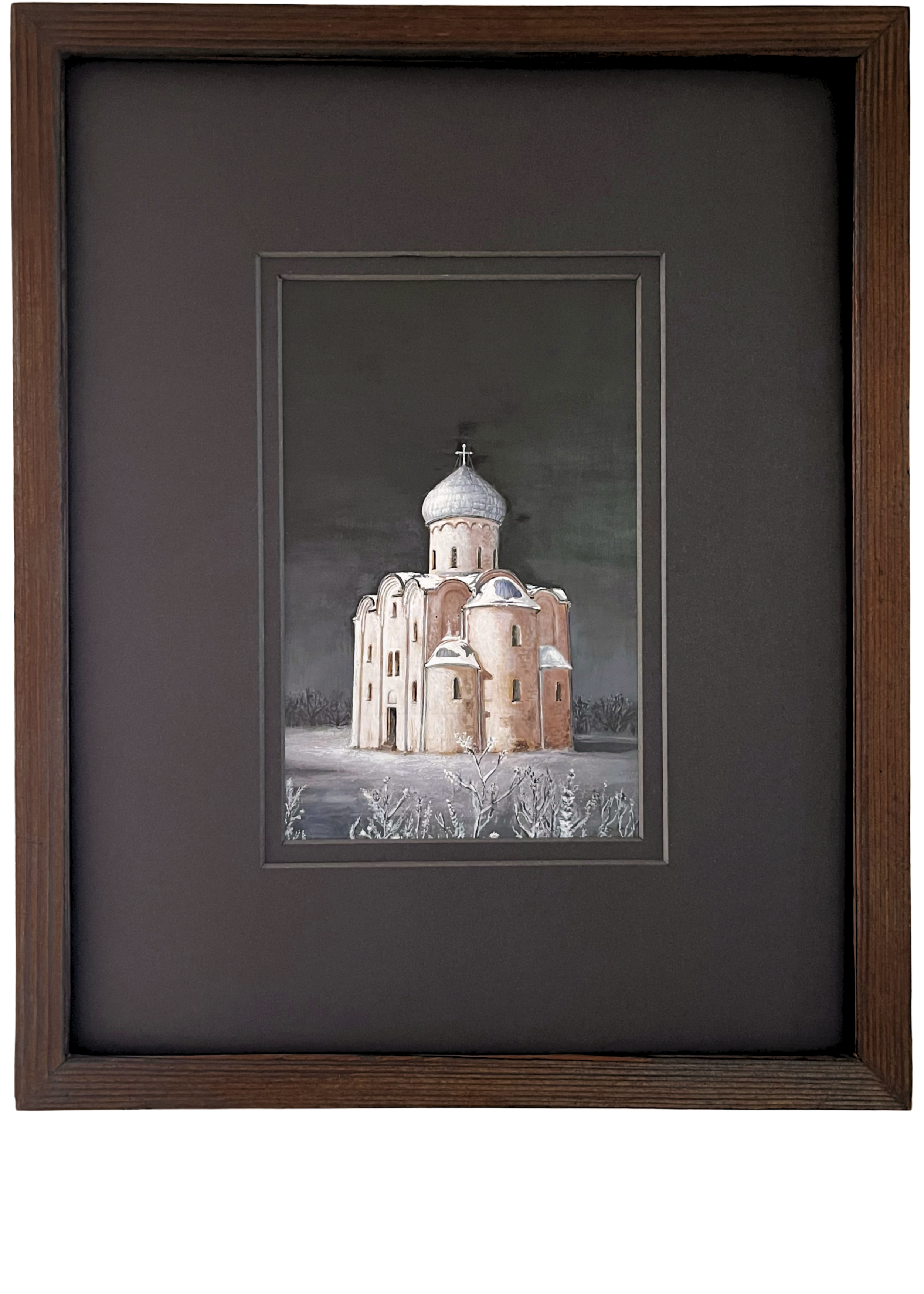
Testaments of Duality
2021. Gouache on paper, diptych, 10 × 8 in. each.
Two churches stood newly built in the year 1200, marking the spread and institutionalization of Christianity across Europe—one in Borgund, the other in Novgorod. Both arose from the same doctrine, yet their manifestations are strikingly different. Their visual contrast reflects how sacred and instructive texts are reshaped by local interpretation.
Side by side, they reveal the precarious nature of written language. When treated as fixed, it can foster division and conflict. Yet that same instability is also its strength: the capacity for reinterpretation allows space for creativity, evolution, and justice.